Sharing knowledge with the liquid adventurer.
Gastro Cocktail Academy is an advanced institution for beverage innovation and liquid R&D built by professionals from the world's best bars and kitchens, and open to those who want to work at that level.
The Academy
Our curriculum combines fermentation science, applied technology, gastronomic technique, and structured R&D methodology.
It is built for people who want to understand not just how a drink is made, but why it works — and how to develop something original.
Training
We work with hotels, boutique properties, and beverage entrepreneurs who want their offering to be genuinely distinctive, and not just competent.
We bring the same rigour and creative methodology that defines the world's best beverage programmes, and translate it into formats that work for real businesses.
Events
We designsand lead focused masterclasses combined with curated tasting and cocktail experiences - developed with full technical and creative input.
The result is something well above the standard format: an event with a genuine idea behind it.
A complete approach to beverage innovation
Why Gastro Cocktail Academy?
-
Understanding what actually happens inside a drink — how fermentation builds acidity and complexity, how clarification techniques like milk wash or centrifugation remove unwanted texture without stripping flavour, how carbonation behaves under different pressures, how enzymes modify mouthfeel. This is the foundation. Not technique as a set of steps to follow, but technique as applied science you can control and repeat.
-
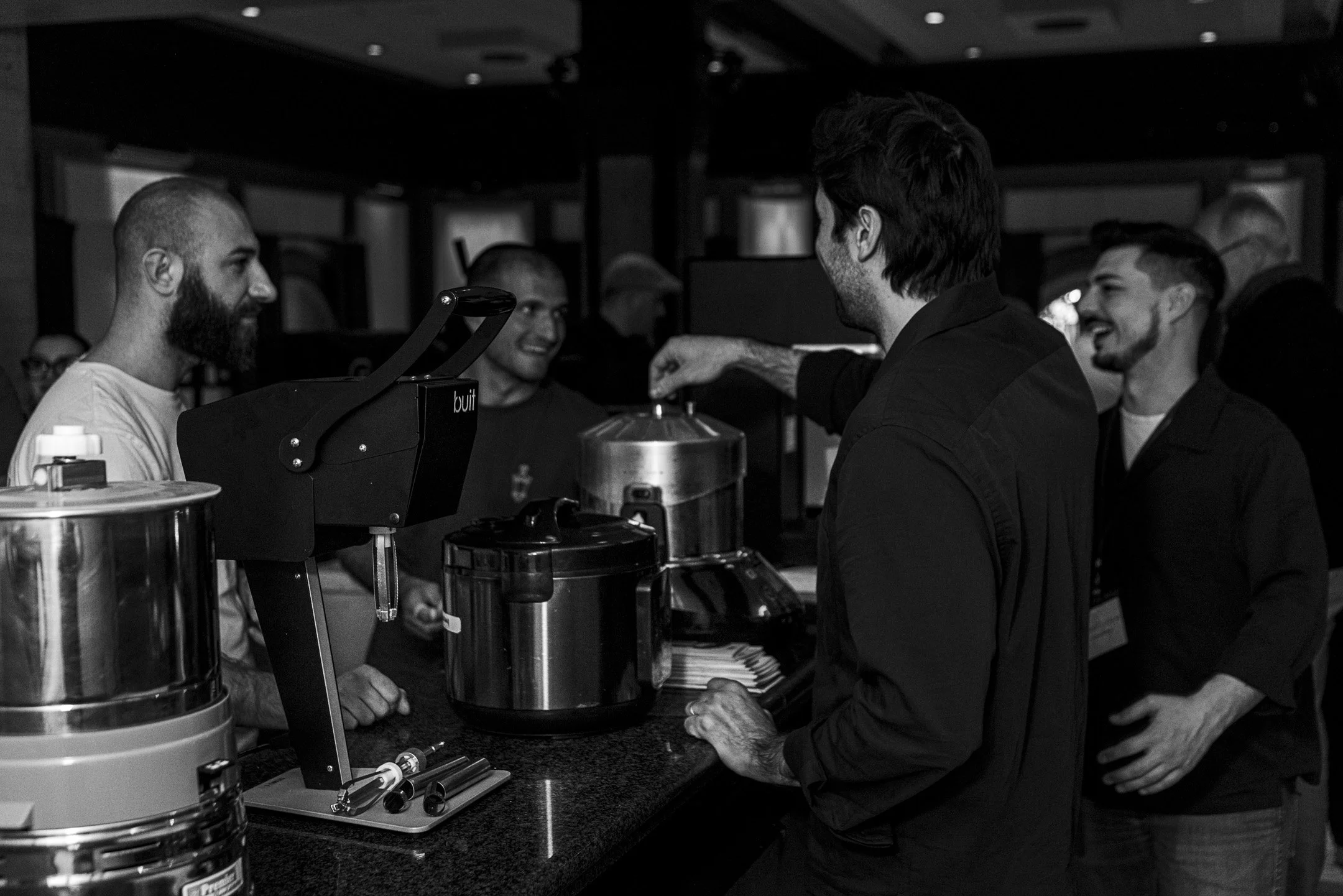
The machinery that makes modern beverage development possible — rotary evaporators, freeze dryers, ultrasonic homogenisers, fermenters — understood not as impressive equipment to name-drop, but as tools with specific functions. Knowing which machine solves which problem, and how to build a working lab around your actual needs, is what separates a professional R&D environment from an experiment.
-
A drink needs an idea behind it. The Minor in Mixology addresses this through beverage design rooted in local ingredients and foraging, the development of original flavour profiles through fermentation and infusion, and the construction of drinks — alcoholic, low-alcohol, and zero-proof — that have a genuine identity. Not aesthetic novelty for its own sake, but concept as a technical brief: something you can prototype, test, and refine.
-
This is what most programs skip entirely. The Minor in Mixology builds in structured R&D methodology — design thinking, ideation frameworks, prototyping cycles, testing and more — so that creativity becomes a repeatable process rather than a lucky moment. Applied to a single cocktail or a full beverage program, the process is the same: define the problem, develop the concept, prototype, test, iterate.